For mold remediation in Orange, CA, call HHI Restoration at (714) 209-7719. The company runs a 24/7 line, holds IICRC AMRT mold remediation certification, and carries a 4.8-star Google rating built from local jobs.
If you’ve pulled the baseboard off a bathroom wall in an Old Towne Orange craftsman and found a dark, musty-smelling stain spreading toward the hallway, you’re past the point of a DIY spray bottle. The same goes for a water-stained ceiling tile near Chapman University that keeps coming back no matter how many times you paint over it. Mold like that needs a plan, not a guess.
Is This a Job for a Mold Remediation Company, a Plumber, or Your Insurer?
Call a mold remediation company first whenever visible mold covers more than about 10 square feet or keeps returning after cleaning. Call a plumber or roofer first if water is still actively getting in.
The EPA draws its own line at roughly 10 square feet, about the size of a small closet wall. Below that, a homeowner can often handle cleanup with gloves, a respirator, and detergent, per the EPA’s mold cleanup guidance. Above that size, or if the mold is inside HVAC ductwork, behind cabinetry, or tied to sewage contamination, it needs a licensed mold remediation crew with containment and negative air pressure.
If the water source is still active, a dripping supply line, a running toilet, a roof leak during a storm, get that stopped first. Remediation can’t hold once new moisture keeps feeding the growth. If you’re not even sure what you’re looking at is mold, the signs of hidden mold guide walks through the giveaways.
Call your insurance company after mitigation starts, not before. Most carriers expect you to stop further damage and document it with photos first; see what a standard homeowners policy typically covers before you file.
What Happens When You Call for Mold Remediation?
A call to a mold remediation company starts with a few questions about the size, location, and likely moisture source, then moves to an in-person inspection.
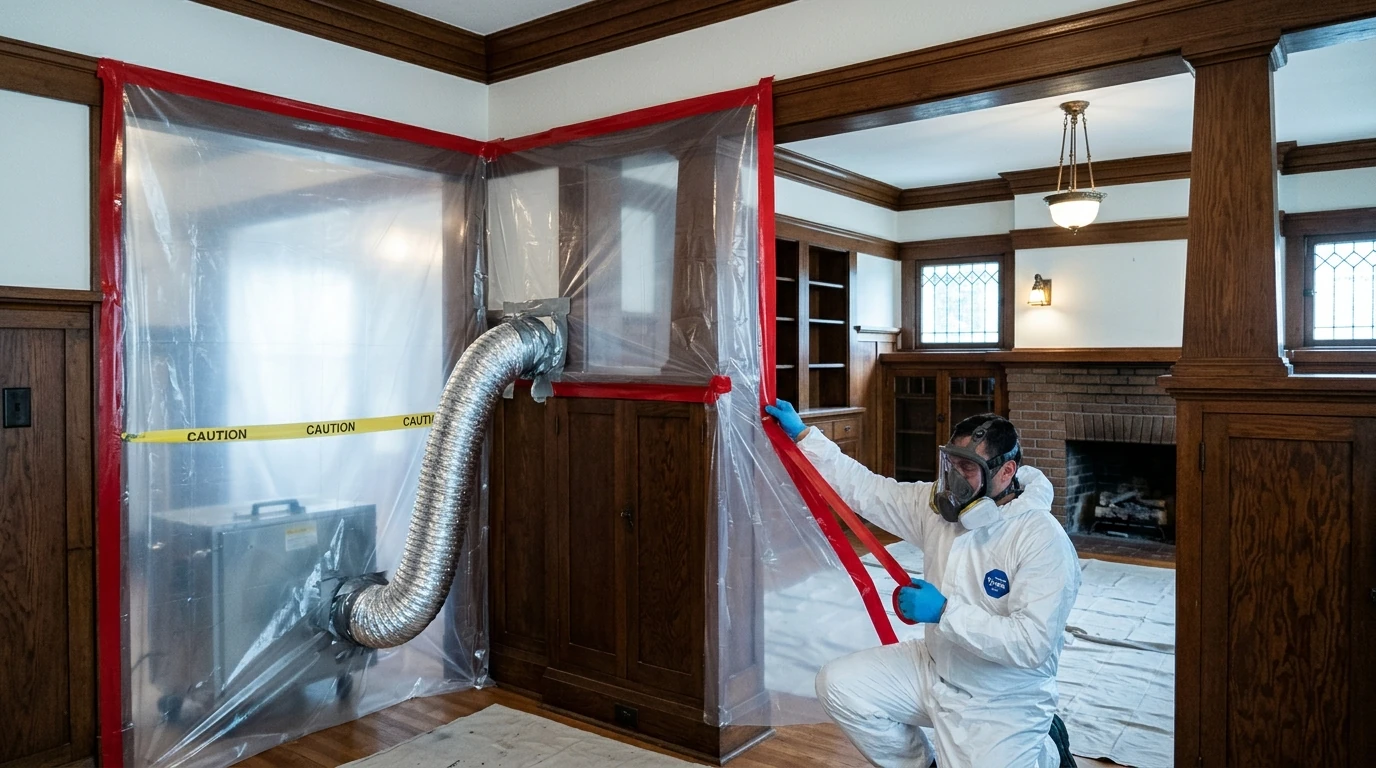
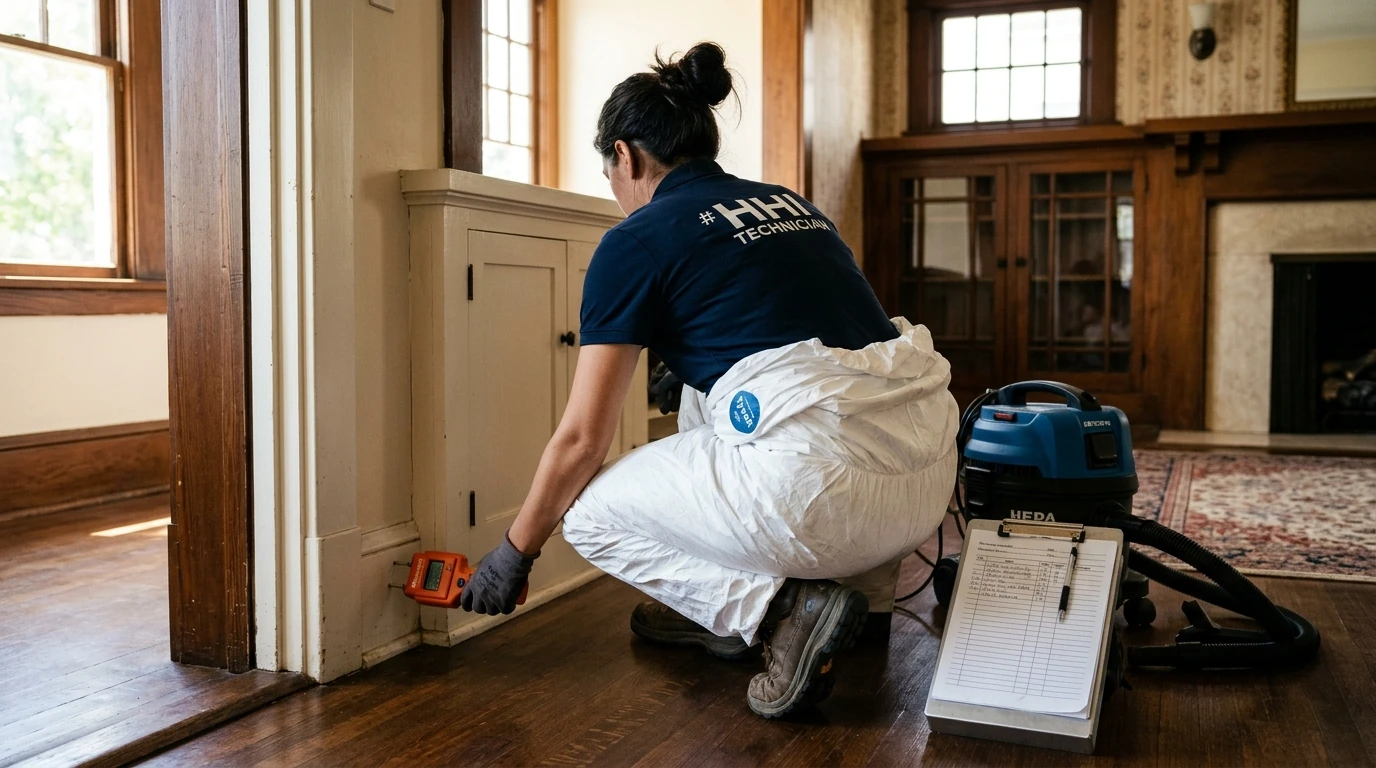
Expect the intake call to ask when you first noticed it, whether anyone in the home has respiratory issues, and whether the area has been wet recently. On-site, a technician checks moisture levels with a meter, maps how far it’s spread behind walls or flooring, and sets containment, usually sheet plastic with negative air pressure, before any material comes out.
Removal follows the ANSI/IICRC S520 mold remediation standard: contaminated porous material like drywall or insulation typically gets removed rather than cleaned, surfaces are HEPA-vacuumed and treated, and the space runs through air scrubbing before a post-remediation verification confirms the job is actually done. That verification, not a visual check, is what should close out the job.
Will Homeowners Insurance Cover the Call?
Most standard homeowners policies only cover mold remediation when it results from a sudden, covered water loss, and many cap mold coverage at a few thousand dollars even then.
Mold from a slow, long-term leak behind a shower wall or a maintenance issue like a clogged gutter usually falls outside standard coverage, since insurers treat that as preventable neglect rather than a sudden loss, per the Insurance Information Institute. If the mold followed a burst pipe or another sudden event, there’s a better chance it’s covered, subject to your policy’s mold sublimit. Either way, keep photos and receipts from the moment you find it; that documentation is what an adjuster asks for first.
Mold doesn’t wait for a convenient week. The EPA notes it can begin growing within 24 to 48 hours on wet material. Call (714) 209-7719 to schedule a mold assessment and get a written scope before anyone starts cutting into drywall.
Licensed for Mold Work in Orange County
The company behind this number is CSLB licensed (#960721), an IICRC Certified Firm with AMRT mold remediation accreditation, and has worked on Orange County homes and businesses since 2004. Technicians also hold IICRC water damage and structural drying credentials, which matters because most mold calls start as a water problem. License status can be verified directly through the California Contractors State License Board.