For mold after water damage in Orange, CA, call HHI Restoration at (714) 209-7719. They hold IICRC AMRT mold and WRT water certifications, run 24/7, and handle the drying and the mold remediation on the same job so nothing sits waiting between the two.
Maybe you dried out the carpet after a supply line let go, or the leak under the kitchen sink finally got found two weeks after it started. Now there’s a musty smell by the baseboard, or a faint gray haze creeping up the drywall. The question isn’t just who fixed the leak, it’s who stops what’s growing now. A restoration company, a mold inspector, and your insurance company each do a different part of this job, and calling them in the wrong order costs time mold doesn’t give you.
Who do you call first: a restoration company, a mold inspector, or your insurance company?
Call the restoration company first. Visible mold growth after a water loss needs containment and remediation started quickly, and a company holding both water damage and mold credentials can assess the moisture source and the growth in the same visit, instead of waiting on a separate inspection report first.
An independent mold inspector earns their fee when the mold isn’t visible yet, when a tenant or buyer needs third-party clearance testing, or when there’s a dispute over whether remediation actually worked. For straightforward visible mold tied to a known leak, most Orange County restoration companies send a technician out who tests moisture, documents the affected area, and can start containment the same day.
Call the insurance company after mitigation is already moving, not before. Most policies require the homeowner to limit further damage, and stalling the start of drying or remediation while waiting on an adjuster assignment can work against the claim later, according to the Insurance Information Institute.
When do you need a plumber before you need the mold remediation crew at all?
Call a plumber first only if water is still actively leaking or flowing, something no restoration crew is licensed to repair. Once the source is stopped, the next call is for drying and remediation, not before.
A failed supply line, a cracked drain pipe, or a water heater that’s still dripping needs the source shut off before any drying work makes sense. Air movers running next to an active leak just waste power. If you’ve already shut the water off at the fixture or the main, skip the plumber step and go straight to water damage restoration, because the clock on mold growth starts the moment materials got wet, not when the plumber finishes the repair.
How fast does mold actually grow after water damage?
Mold can begin growing on wet drywall, insulation, and wood framing within 24 to 48 hours, according to the EPA. That window is why the order of your calls matters more than which specific company you pick.
Drying equipment, air movers and a dehumidifier running for roughly 24 to 48 hours, stops that clock in most clean-water (Category 1) losses. Water that sat for several days, or water from a gray or black water source like a washing machine overflow or a sewer backup, gives mold a head start. Those situations often mean affected drywall or insulation gets removed rather than dried in place. If you’re not sure which category applies, that’s part of what a technician documents on the first visit, not something to guess at over the phone.
Does homeowners insurance cover mold that shows up after a water loss?
Usually yes, but with limits. Most homeowners policies cover mold remediation tied to a sudden, covered water loss like a burst pipe, but many cap mold coverage at a set dollar amount separate from the water damage repair cost.
Mold tied to gradual leaks, long-term seepage, or a failed sump pump usually isn’t covered unless you added a water backup endorsement, because the water damage itself wouldn’t have been covered either. Ask your adjuster for the policy’s specific mold limit in writing before remediation starts, so there’s no surprise about what’s paid versus what’s out of pocket. For the broader breakdown of what a standard policy does and doesn’t pay for, see does homeowners insurance cover water damage.
Do you need a separate mold inspection, or does the remediation crew handle testing too?
You need a separate, independent inspector mainly for post-remediation clearance testing, not to find mold you can already see. For visible growth with a known water source, the remediation crew’s own moisture mapping and visual assessment is usually enough to start work.
Independent third-party testing matters most when a landlord-tenant dispute, a home sale, or an insurance disagreement needs documentation from a company with no financial stake in the remediation itself. If that’s your situation, a dedicated mold inspection and testing visit before any remediation work gives you a clean, defensible baseline. For most homeowners dealing with mold after a known leak, going straight to mold remediation saves a step most people don’t have time for once growth has started. If you’re still not sure what you’re looking at, these seven signs of hidden mold are worth checking before you decide.
What happens when you call?
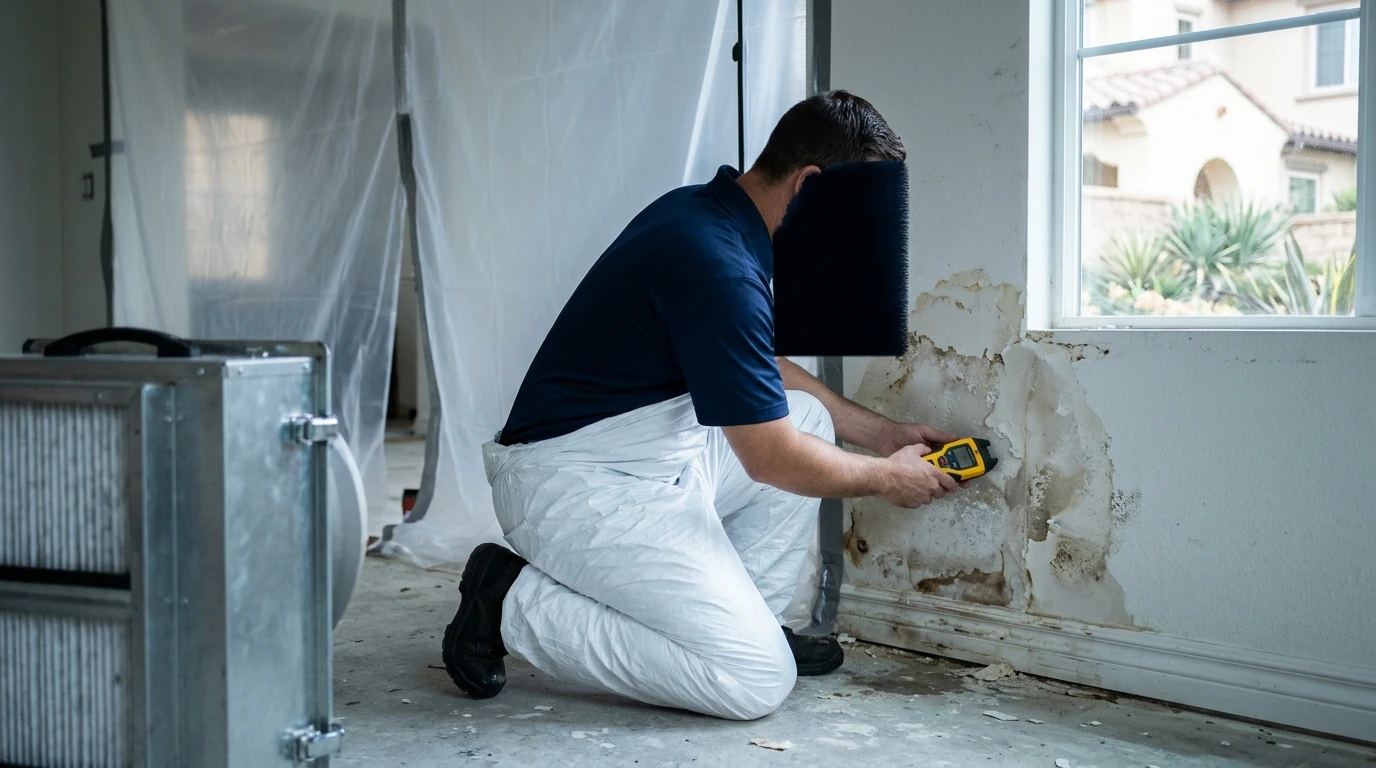
A technician walks the affected area, checks moisture levels behind walls and under flooring with a moisture meter, and gives you a written scope of what needs to be dried, removed, or remediated before any work starts.
- Initial call: describe what happened, when, and roughly how long the area has been wet.
- On-site assessment: moisture mapping, a visual check for growth, and a containment plan if mold is confirmed.
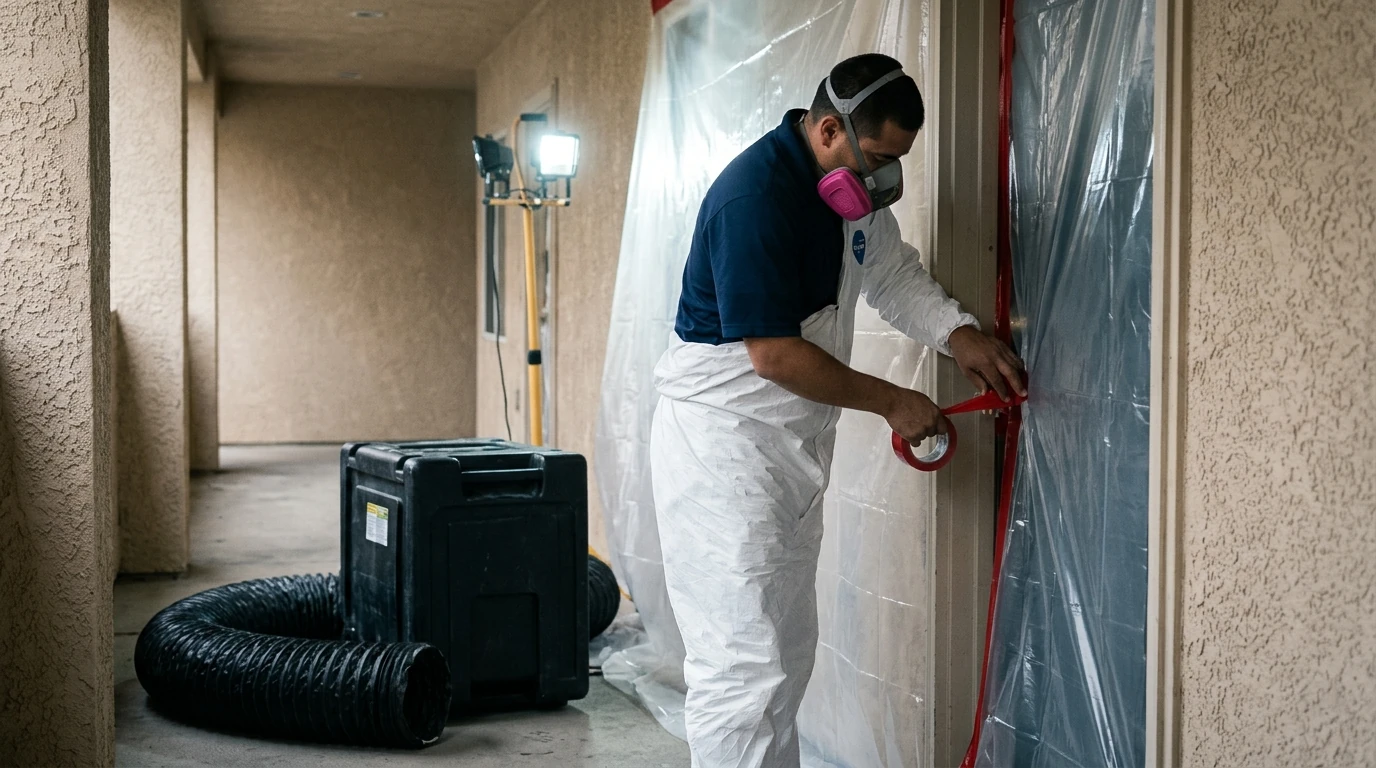
- Containment and remediation: poly sheeting, negative air pressure, and HEPA filtration following the ANSI/IICRC S520 mold remediation standard.
- Structural drying, done at the same time so the same leak doesn’t cause a second round of growth.
- Documentation for your claim: photos, moisture readings, and a written scope handed over for the insurance file.
If you’re staring at a damp patch and a musty smell right now in Orange, Anaheim, Santa Ana, or anywhere nearby, the fastest path to stopping it is one call that covers both the water and the mold. Call HHI Restoration at (714) 209-7719 to get a technician out and a written scope before the 48-hour window closes.