
In Orange, CA, mold remediation alone typically costs $1,500 to $7,000 depending on the size of the affected area. Once a contractor tears into a wall or ceiling and the material tests positive for asbestos, most combined mold-and-asbestos jobs run $4,000 to $25,000, because the asbestos has to come out under containment before anyone can touch the mold behind it.
If you’re renovating a 1960s or 1970s home in Old Towne Orange or Orange Park Acres and a contractor just found water staining under a popcorn ceiling or behind a bathroom wall, this is the moment the project usually gets more complicated and more expensive than the original estimate. Here’s why, and what actually drives the final number.
Why does finding mold trigger an asbestos test in an older Orange home?
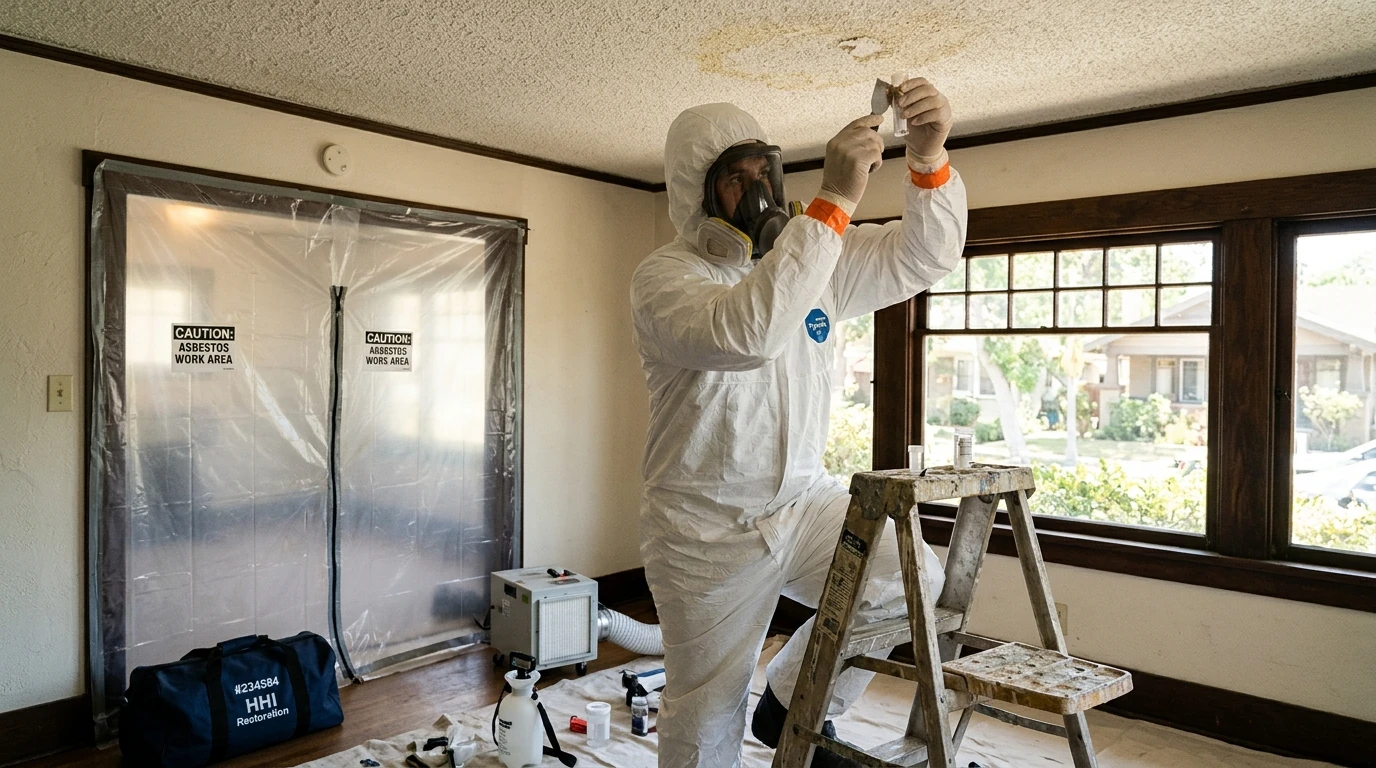
Any home built before 1980 in Orange County may have asbestos in its popcorn ceiling texture, drywall joint compound, vinyl floor tile mastic, or duct insulation, and disturbing those materials without testing first is a regulatory and health risk. Mold crews can’t legally start cutting into those surfaces until they know what’s in them.
Old Towne Orange has one of the largest concentrations of pre-1940s and mid-century homes in the county, and Orange Park Acres has a mix of 1960s-1970s tract construction, both squarely in the era when asbestos-containing joint compound and popcorn ceiling texture were standard. A moisture problem behind a wall in one of these homes almost always means a bulk sample goes to the lab before demolition starts, per EPA asbestos guidance and California Air Resources Board’s Asbestos Airborne Toxic Control Measure, which regulates disturbance of asbestos-containing material during renovation and demolition statewide.
Testing is quick: a technician takes small bulk samples from the ceiling texture, drywall joint compound, or mastic and sends them to an accredited lab. Results typically come back in 2 to 5 business days. If the material comes back positive, the abatement sequence changes everything downstream.
What does mold and asbestos remediation typically cost in Orange, CA?
Costs scale with how much asbestos-containing material has to be removed before the mold can be addressed, not just the square footage of visible mold. A clean mold job with no asbestos involved stays cheap; add abatement and containment, and the number climbs fast.
| Scenario | Typical cost range |
|---|---|
| Mold remediation only, single room, no asbestos materials disturbed | $1,500 - $3,500 |
| Asbestos bulk sample testing and lab analysis (per sampling visit) | $250 - $600 |
| Mold remediation behind drywall that tests positive (under 25 sq ft) | $3,500 - $7,500 |
| Popcorn ceiling asbestos abatement + mold remediation (per room, ~200 sq ft ceiling) | $4,000 - $9,000 |
| Whole-house mold + asbestos abatement (multiple rooms, HVAC cavities, drywall) | $10,000 - $25,000+ |
| Drywall and texture replacement after abatement (per room) | $2,000 - $5,000 |
These are typical industry ranges for Southern California, not a quote. Every structure is different, and the only accurate number comes from a written scope after testing and inspection.
What actually drives the price up or down?
The single biggest cost factor is whether the asbestos-containing material is intact and localized, or disturbed and spread through demolition debris, dust, or HVAC circulation. The second biggest factor is the IICRC water category behind the mold, since Category 2 and 3 water usually means more porous material has to be removed rather than dried in place.
Other factors that move the number:
- Square footage of affected ceiling, wall, or flooring. Abatement contractors typically price by the square foot once containment is set up, so a single bathroom costs far less than a whole ceiling run.
- Containment complexity. A negative-pressure enclosure with HEPA-filtered exhaust for one room costs less than sealing off an entire HVAC system.
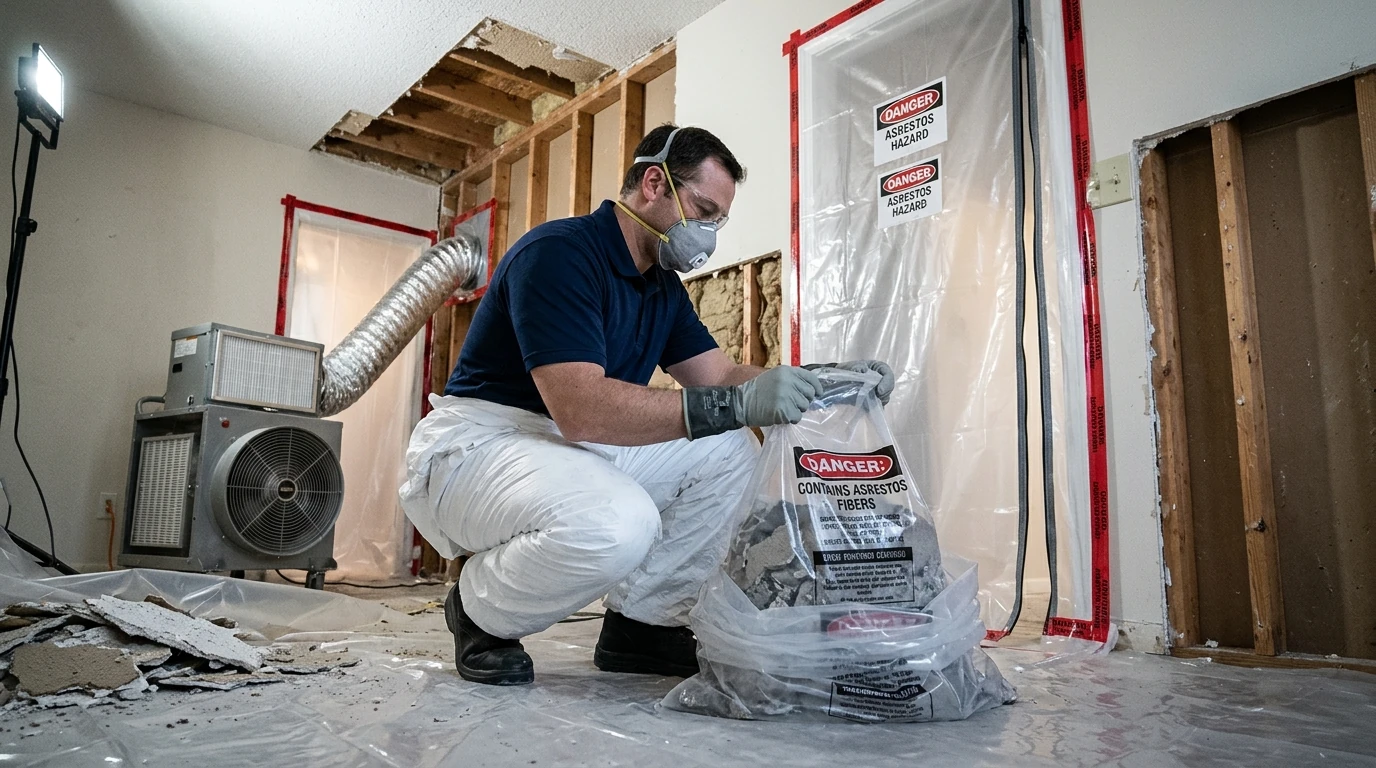
- Access and disposal. Asbestos waste has to be double-bagged, labeled, and hauled to a permitted disposal facility, which adds a line item that mold-only jobs don’t have.
- Reconstruction scope. Removing drywall or ceiling texture means someone has to put it back. Reconstruction after abatement is almost always priced separately from the remediation itself.
- Mold extent and moisture source. If the mold has been growing for weeks rather than days, more framing and insulation may need replacement rather than cleaning, per EPA mold cleanup guidance.
Our CA-wide mold cost guide breaks down mold-only pricing in more detail if asbestos isn’t part of your situation. If lead paint is also a concern in an older Orange home, our asbestos and lead abatement overview covers that separately.
Will homeowners insurance cover any of this?
Most standard homeowners policies cover the asbestos abatement and mold remediation tied to a sudden, covered water loss, like a burst supply line, but they typically exclude the cost of removing asbestos or mold caused by gradual leaks, long-term moisture, or deferred maintenance. Coverage depends heavily on the specific policy language and the documented cause of the moisture.
Mold coverage itself is often capped at a few thousand dollars even on policies that do respond, separate from the dwelling coverage limit. Asbestos abatement costs triggered by a covered loss are more likely to be included than abatement done as part of a voluntary renovation, where it’s usually treated as an owner expense. The Insurance Information Institute has a plain-language breakdown of what standard policies typically cover and exclude.
Documentation matters either way. Photos of the original damage, the moisture source, and the lab results from asbestos testing all support a claim and protect you if the insurer disputes the cause later.
What does the process actually look like?
- Inspection and moisture assessment. A technician identifies the mold’s extent and the moisture source, and flags any materials that may need asbestos testing given the home’s age.
- Bulk sampling and lab analysis. Small samples go to an accredited lab; results typically take 2 to 5 business days.
- Containment setup. If asbestos is confirmed, the area is sealed with poly sheeting and a negative-air machine before any demolition begins.
- Asbestos abatement. Licensed crews remove the contaminated material under containment, bag and label it, and transport it to a permitted disposal site.
- Mold remediation. Once abatement clearance is confirmed, mold removal proceeds to the IICRC S520 standard, including HEPA vacuuming, antimicrobial treatment, and drying the area.
- Reconstruction. Drywall, texture, or flooring removed during abatement gets replaced to match the original finish.
Skipping the sequence, say, sanding a popcorn ceiling before it’s tested, is the single most common and most expensive mistake homeowners make in older Orange neighborhoods, because it can spread asbestos fibers through the HVAC system and turn a single-room job into a whole-house one.
What should you do next?
If your home was built before 1980 and you’ve found mold behind a wall, ceiling, or under flooring, get it tested before anyone starts cutting into the material. A combined inspection that checks for both mold and asbestos in the same visit saves a second trip and keeps the project on one timeline.
HHI Restoration has handled mold remediation and asbestos abatement in Orange and the surrounding cities since 2004, and provides a written scope before any work begins so you know what’s driving the cost before you commit. Call HHI Restoration at (714) 209-7719 to schedule a combined mold and asbestos assessment.
About HHI Restoration
HHI Restoration is an IICRC Certified Firm serving Orange, CA and Orange County since 2004, holding California contractor license #960721. Their crews carry IICRC AMRT mold certification and EPA Lead-Safe Certified training, and handle mold remediation, asbestos abatement, and the reconstruction work that follows it across Orange, Anaheim, Santa Ana, Irvine, and the surrounding communities.